Thursday, 11 June 2015

3D Modelling for Object and Environment


3D Modelling for Object and Environment

Transportation

In this task we were told to create a transportation for animation. For the starter, I sketch the model of the car that I want. I just use the side view and then I ask my friend, Tomie to help me created it in Maya. I couldn't show it in this blog post because of my laptop crash on doing this progress.


Picture 1: My car sketches tken using camera phone

Then, I transfer it into Maya to created the 3D model.

Screenshot 1: Screenshot of the progress

Screenshot 2: The second progress


3D Modelling for Object and Environment


 3D Modelling for Object and Environment

Introduction to 3D

Image 1: 3D logo taken at http://crmstudios.com/wp-content/uploads/2014/07/3D-Technology.png

3D also known as 3 dimensional space is a geometric 3 parameter model physical universe in which all known matter exist. Those 3 dimensional consists of combination of 3 chosen from the terms of length, width, height, depth and breadth.

Image 2: The 3 dimensional axis in 3D taken at http://en.wikipedia.org/wiki/File:Coord_planes_color.svg

3D Modelling Principle

These modelling principle are fundamental standards of 3D artists need to think before they start modelling something:
  • Realism
  • Detail
  • Functionality
  • Scale and Proportion
  • Appeal
  • Volume
  • Exaggeration
  • Weight


3D Modelling for Object and Environment


3D Modelling for Object and Environment

Introduction to Maya

Image 1: Logo of Maya


Maya is a powerful 3D modelling, animation, effects and rendering solution that been used in everything to feature films. We learn about how to use Maya in this module to created a 3D model. It is an interesting software to explore but sometimes it need big capacity of internal to save and to open the software.

Maya Interface

Image 2: The base in Maya taken at http://xchrisone.com/xchris1/wp-content/uploads/2014/06/Autodesk-Maya-2013-x64-1492.jpg

Image 3: The base look from 4 views. Top, Side, Front and orthographic view taken at http://www.worldofleveldesign.com/categories/3d_modeling/images/maya-beginner-basics/001-maya-beginner-basics-05.jpg

In Maya there many tools that can be use but mostly the expertise of Maya would use hotkeys to shortcut they selected the tool.

Image 4: Maya Hotkeys taken at http://www.fullsailblog.com/content/uploads/2014/05/MayaHotKeys1.jpeg

Maya Layout Toolboxs

This Maya Layout Toolboxs is at left sides of the Maya interfaces, it helps the user to selected the tool they want from there.

Image 5: The Maya Layout toolboxs taken at http://download.autodesk.com/global/docs/maya2014/en_us/images/comp_toolbox_1.png

Maya Shelf

Maya Shelf is on the upper view of the Maya interface. The Maya users can selected what they want to put in their artworks and create something from the shelf. It also organizing the commonly used function in one group.

Image 6: The Maya Shelf on the upper view taken at http://www.worldofleveldesign.com/categories/3d_modeling/images/maya-beginner-basics/003-maya-beginner-basics-01.jpg

Maya Work space

Maya work space display by the defaults of the panels and the perspective. You can adjust at the view at Maya tool box at the left side of Maya.You can display your artwork in various display it customize panels. The artworks can be view to the 4 views and also customize panel for rendering, texturing and etc.

Image 7: Example of screen shot of Maya Work Space taken at http://blogs.oregonstate.edu/ecampuspdt/files/2012/11/Screen-Shot-2012-05-01-at-2.07.55-PM-Hort349Process.png


Contemporary Design Issues


 Contemporary Design Issues

My Argument


Topic: How the Designer change the Perceptions of Children using Packaging.


Why I choose this topic as argument? I choose it because I want the children to eat healthy food and no just attracted to the colorful junk food. It is because, nowadays the population of the obesity in children and adolescent is increasing rapidly and it worries everyone out there. It also the increase the production and consumption of unhealthy food in children especially in Malaysia.


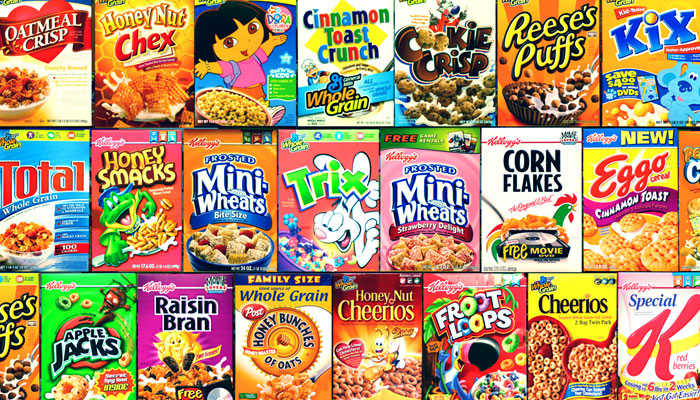
What the cause of this phenomenal acts in children? One cause that we already know is how attractive the junk food compare to the healthy food especially in colors and design.

Below is the image of the comparison between junk food and healthy food design:


Image 1: The color of junk food package taken at http://www.abc.net.au/news/image/377604-3x2-940x627.jpg


Image 2: The design of the sweet cereal taken at http://idsgn.org/images/business-cards-from-cereal-boxes/cereal_boxes.jpg


So, we can see the different of junk food and healthy food. As we know children trend to attract to bright thing and they favorite comic, cartoon or story book characters. This is where the problem start especially in manufacture. The manufacture would like to continue their business and if the product they produce rapidly consume by the consumer and this also help to increase their selling.

There is one cause that people doesn't realize especially the parent, it known as "Pester power" or the kid nag their parent to buy the thing that they want.

Contemporary Design Issues


 Contemporary Design Issues

The Argument Introduction

An argument is the stand point or view of the Author. In academic, argument is form of written text but in art practitioners, this could be in form both of written and practice based work. To develop an argument the author must have a debatable claim.

Researching the Argument

To support your argument you conduct research. There are 2 types of research:

  • Primary research
  • Secondary research
Both will use many sources of evidence. Yours sources must be credible. To ensure their credibility ask yourself the following questions:
  • who is the author ?
  • how recent is the source ?
  • what type of sources does your audience value ?
Be careful when evaluate internet sources.

Organising the Argument

Use the Toulmin Method as your formula to organising your argument. The basic format for Toulmin Method is as follow:
  • Claim: The overall thesis the writer will argue for.
  • Data: Evidence gathered for support the claim
  • Warrant(Bridge): Explanation of why or how the data supports the claim, the underlying assumption that connect to your claim.
  • Backing(Foundation): Additional logic or reasoning that may be necessary to support the warrant.
  • Counterclaim: A claim that negates or disagrees with the thesis/claim.
  • Rebuttal: Evidence that negates or disagrees with the counterclaim.

Contemporary Design Issues


 Contemporary Design Issues

Introduction towards the Contemporary Design Issues.

In Contemporary Design Issues, there would be rhetoric. Rhetoric is any communication used to modify the perspective of others. It is divided by 2:


1. Author: is anyone creates communication.
2. Audience: is anyone who receives communication from Author.

Author has 2 purposes for employing a rhetorical communication. These are informative and persuasive. Informative cover such thing as:
  • to inform
  • to describe
  • to define
  • to review and etc
Persuasive covers such thing as:
  • to persuade
  • to convince
  • to influence
  • to argue and etc
Audience also has 2 purpose in receiving communication. These are passive and active purpose. Passive covers such thing as:
  • to receive notice
  • to feel reassured
  • to feel sense of unity
  • to be entertained
  • to enjoy and etc
Active covers such thing as:
  • to examine
  • to quantify
  • to asses
  • to criticize
  • to ridicule and etc

Museum Gallery and Heritage Studies


Drawing Process (Part 2)

On this second visit to SUHU Art Space. We continued on the talk about drawing process and the tutorial of drawing realism. He show us about the types of brushes you use and you need to see the types of brushes that suitable for the painting. Other than brush, he said we could use other thing while painting the artwork as he said it is a role of painting. The painting will give more feeling for the different effect that we use.

He also show us why he mix color in wooden or why he use as pallet. It is because the wood pallet will not mixing with other color, not like the other pallet such as plastic pallet would interrupted the other color mixing. The wood is absorbent and when it dry we could use another color on it.

Picture 1: Dr. Husnaidi using the image in his phone to paint back his artwork take at SUHU Art space using camera phone


Picture 2: A set of acrylic paints and wood mixing pallet taken at SUHU Art Space using camera phone.